

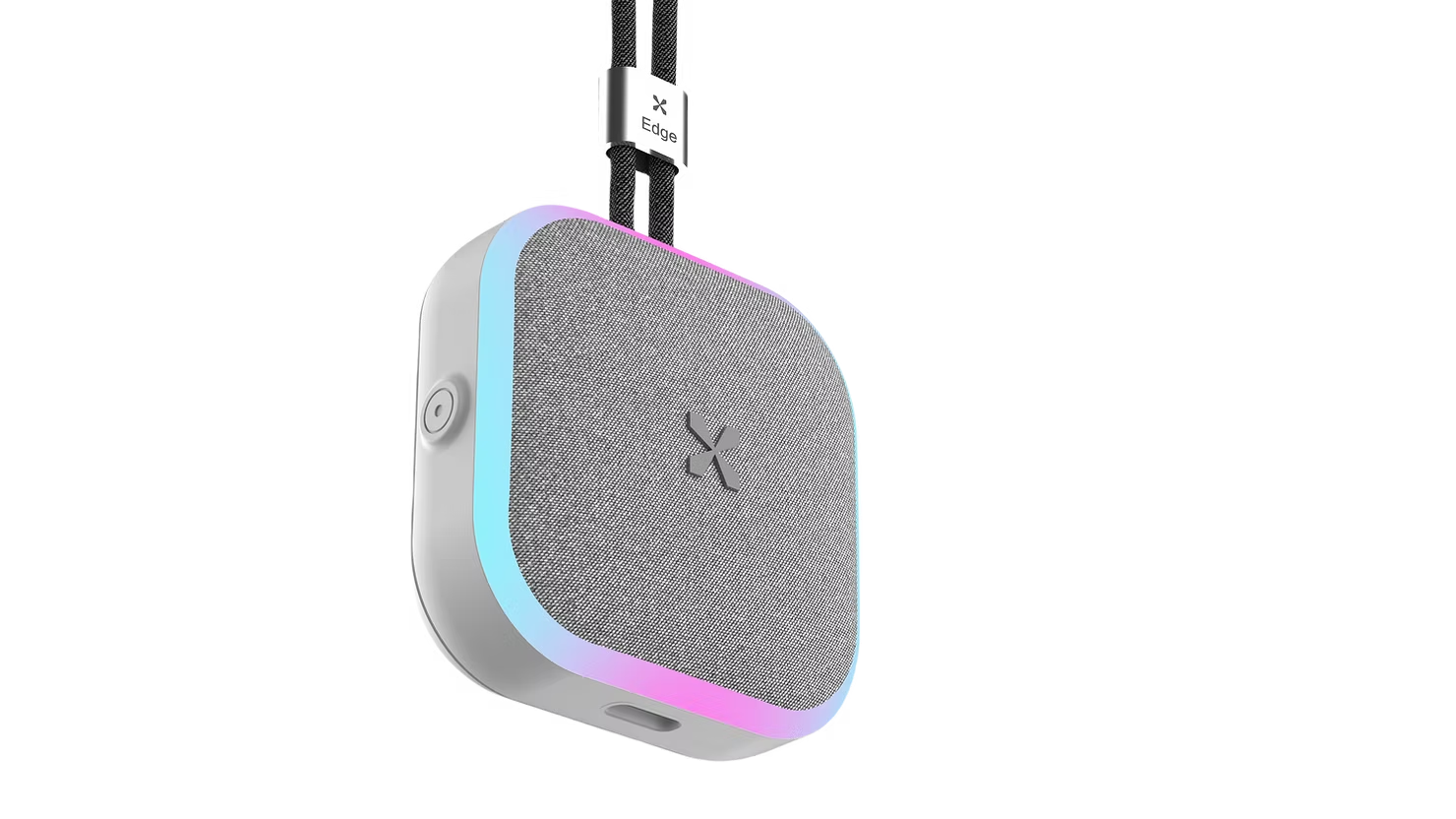
Eliza AI: Pioneering the Future of Wearable Voice Assistance
In the ever-evolving landscape of artificial intelligence, Eliza AI emerges as a groundbreaking innovation, seamlessly blending advanced technology with everyday functionality. This portable, AI-powered voice assistant is not just a gadget; it’s a companion designed to enhance communication, entertainment, and home automation experiences. What’s more, its versatility extends to children’s plush toys, making it the perfect interactive companion for younger users. A Glimpse into the Future: Eliza AI’s Technological Backbone Eliza AI is powered by Alibaba Cloud’s Qwen 2.5-Max model, a state-of-the-art large language model (LLM) that surpasses its predecessors in performance. With capabilities that rival models like GPT-4o and DeepSeek-V3, Qwen 2.5-Max offers advanced natural language understanding, multi-turn conversations, and real-time streaming responses across text, audio, and video formats. This robust AI foundation enables Eliza to deliver context-aware interactions, making conversations more intuitive and engaging. Whether you’re seeking information, controlling smart home devices, or enjoying personalized entertainment, Eliza’s advanced AI ensures a seamless experience. Design Meets Functionality: The Wearable Assistant Eliza AI’s design is a testament to the fusion of style and practicality. Resembling a sleek, necklace-like pendant, it houses a suite of features: Noise Reduction & Echo Cancellation: Ensures clear audio quality in various environments. Automatic Gain Control: Maintains consistent audio levels for optimal listening. Low-Power Consumption: Supports extended usage, making it ideal for outdoor activities. These design elements cater to a diverse audience, including children, young adults, the elderly, and smart home users, providing a versatile solution for various needs. Targeted User Experience Eliza AI is perfect for multiple demographics: Children: The wearable design makes Eliza an ideal companion for younger users, fostering creativity, learning, and entertainment in a fun way. Young Adults and Elderly: Eliza serves as a great communication aid, connecting users with their loved ones, assisting with daily tasks, and providing entertainment and smart home control. Smart Home Users: As part of your smart ecosystem, Eliza integrates easily into your home, enabling voice control for smart devices and improving the overall convenience of home automation. Plushy Toy Integration: Bringing Eliza to Kids Eliza AI is not just a wearable device; it’s also perfect for use in plush toys, making it an excellent companion for children. Imagine a soft, cuddly toy that comes to life with interactive voice responses. By integrating Eliza AI technology into plush toys, children can engage in conversations, hear stories, and enjoy personalized entertainment in a safe, fun, and educational way. The plush toy version of Eliza could provide: Interactive Learning: Kids can learn new things, engage in storytelling, and even get assistance with basic education tasks, all through their favorite stuffed animal. Entertainment: Eliza could act as a source of fun and engaging stories, songs, and games, making learning an enjoyable experience. Comfort & Communication: For younger children, having an AI-powered plush companion can help them feel comforted, while also allowing parents to monitor and control content and interactions. By merging advanced AI technology with the warmth and safety of a plush toy, Eliza becomes more than just a tool, it becomes a valuable companion for children’s growth and entertainment. Eliza AI vs. Smartphone AI Apps: What’s the Difference? While smartphone-based AI apps, such as ChatGPT or Google Gemini, offer convenience for on-the-go voice assistance, Eliza AI sets itself apart in several key areas: Wearable and Seamless Integration: Unlike smartphone apps that require you to unlock your phone and interact through a screen, Eliza AI is always within reach. Worn as a necklace or integrated into a plush toy, Eliza allows for instant, hands-free voice interactions, making it ideal for those moments when you’re too busy to pick up your phone or when you want a more immersive, constant presence. Tailored Experiences for Children: Smartphone AI apps typically cater to adults, whereas Eliza AI can be specially designed to suit the needs of younger users. Through its plush toy integration, Eliza offers educational and interactive experiences that are more engaging and child-friendly compared to standard phone apps. AI-Powered Smart Home Control: While smartphone AI apps can control smart devices, Eliza AI is specifically optimized for continuous voice-based home automation. It offers more reliable, hands-free control over your smart home ecosystem, whether you’re managing lights, music, or thermostats without having to reach for your phone. Specifications That Speak Volumes Delving into the technical specifications: Chipset: ESP32-S3 modem with 4MB Flash and 2MB RAM. Connectivity: Supports Wi-Fi and Bluetooth 5.0 for seamless integration with other devices. Audio: Equipped with a 2W speaker delivering high-quality sound. Power: Offers 3-4 hours of continuous voice interaction with low standby current. Portability: Compact dimensions (57mm x 57mm x 25mm) and lightweight (50g) for easy wearability. Certifications: CE, FCC, ISED, and UKCA certified, ensuring global compatibility. These specifications underscore Eliza’s commitment to delivering a high-performance, user-friendly experience, whether as a wearable voice assistant or integrated into a plush toy for children. The Legacy of ELIZA: From Past to Present The name “Eliza” pays homage to the original ELIZA program developed in the 1960s, one of the earliest examples of natural language processing. While ELIZA simulated conversation through pattern matching, modern advancements have transformed this concept into sophisticated AI systems capable of understanding and interacting with users in meaningful ways. Conclusion: Eliza AI – Your Intelligent Companion Eliza AI represents a significant leap forward in wearable technology, combining advanced AI capabilities with thoughtful design to create a truly intelligent companion. Whether you’re looking to enhance communication, streamline tasks, or enjoy personalized entertainment, Eliza AI offers a versatile solution tailored to modern lifestyles. For children, Eliza in plush toy form brings the magic of AI to life, offering a fun, interactive, and educational experience. Moreover, with its seamless integration into daily life, Eliza provides a hands-free, immersive experience that goes beyond what traditional smartphone AI apps offer. As an everyday companion, Eliza transforms how you manage your routine, interact with technology, and stay connected.

Haq
Mar
4,
20243
min
read
27
0
Choosing the Perfect LoRa Product for Your IoT Needs
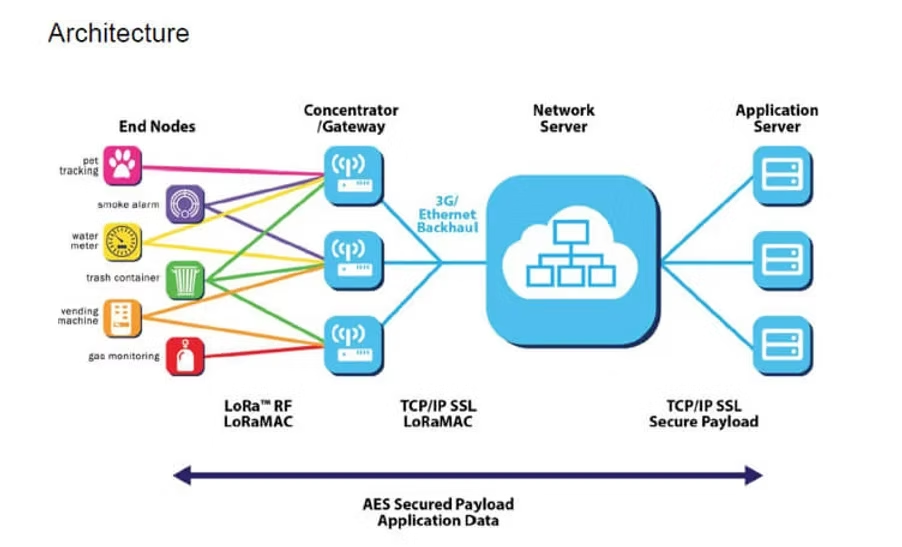
Introduction In the ever-evolving landscape of IoT communication technology, LoRa has emerged as a standout solution, offering exceptional benefits such as long-range connectivity and low power consumption. LoRaWAN, with its numerous advantages like high capacity, global standards, cost-effectiveness, and flexibility, has become the go-to choice for private IoT networks. With the surge in interest from domestic enterprises and educational institutions, selecting the most suitable LoRa product is pivotal for shaping the top-tier design of IoT systems. Let’s delve into the key factors that can guide your decision-making process. 1. Communication Range: The Heart of IoT Connectivity The cornerstone of LoRa’s success lies in its impressive communication range. The communication distance between the farthest node and the gateway defines the network’s scope. Terrain and environmental factors heavily influence this distance, leading to variations like 40km for high-altitude balloon communication, 2km for hilly or tower-rich landscapes, and 5km for more open areas. While the “open viewing distance” provides a general guideline, other environments require on-site measurements. For scenarios where communication distance falls short, three strategies can enhance connectivity: Adjust Communication Rate: Lowering the communication rate can improve reception sensitivity. Optimize Antenna Configuration: Swapping to a high-gain antenna and optimizing its orientation can extend coverage. Increase Gateway Density: Adding more gateways effectively covers signal dead zones, enhancing overall network reach. A fascinating method developed by LinkLabs enables distance calculation using variables, offering an automated estimate of effective communication range. 1.2 Scale: Quantifying the Network’s Scope Scale, often referred to as the “number of nodes,” plays a straightforward role in network sizing. 1.3 Bandwidth: Balancing Data Throughput The required bandwidth, synonymous with network throughput, is measured in “bits per second.” For instance, if you have 100 nodes, each transmitting 60 bytes every 37 seconds, accounting for metadata addition, the bandwidth calculation would be crucial to ensuring efficient data transfer. 1.4 Power Consumption: The Efficiency Imperative When terminal devices and sensors rely on battery power, energy efficiency becomes a critical factor. LoRaWAN’s Class A feature, characterized by “synchronization-free” operation, significantly minimizes terminal energy consumption. Calculating energy usage involves considering the operational mode, current consumption, and duration, resulting in insights into battery life. 1.5 Topology: Mapping Network Structure As the number of network nodes grows, more gateways become necessary to support the expansion. This cascading effect creates multi-hub networks, particularly relevant for medium to large-scale LoRaWAN setups. 1.6 Cost: Calculating Financial Implications Cost analysis is multifaceted, encompassing tangible expenses like equipment procurement and deployment, as well as intangibles such as development, debugging, and technical support. Adhering to principles of quantity superiority and industry maturity, LoRa IoT cost calculations can guide budgeting and resource allocation. 2. Network Architectures: Unveiling IoT Solutions LoRa supports diverse network architectures, each tailored to specific needs: Point-to-Point: Ideal for limited scenarios such as handheld energy meters and valve control. Limitations include no collision avoidance mechanism, constant receiver activity, and lack of automatic networking. LoRa-TDMA (Time Division Multiple Access): Suitable for small-scale networks with timing-based communication, offering a cost-effective approach. However, network capacity limitations and linear latency growth with node count are drawbacks. Small LoRaWAN: A balanced option for small-scale setups demanding real-time capabilities and throughput. Its standardization and interconnectivity across manufacturers enhance its appeal. Medium-Sized LoRaWAN: To enhance real-time communication and network capacity, introducing additional gateways offers a viable solution. The LoRaWAN Server orchestrates intelligent decision-making, optimizing packet reception and transmission. Large LoRaWAN: Envisioned as a carrier-grade solution for extensive geographical coverage, LoRaWAN leverages 3G/4G connectivity to establish a network of numerous gateways. It competes with other large-scale IoT solutions while providing valuable capabilities for massive IoT deployment. Conclusion Choosing the optimal LoRa product requires a thorough assessment of factors like communication range, scale, bandwidth, power usage, topology, and expense. The array of network designs, spanning from point-to-point to extensive LoRaWAN setups, permits adaptation to precise IoT demands. In the evolving landscape of IoT, LoRa’s adaptability and potential enable industries and organizations to establish strong, effective, and customized communication answers. To explore the extensive range of solutions provided by LoRa, don’t hesitate to contact the Inivec team for a personalized, ideal solution tailored to your needs.
Haq
Mar
4,
20243
min
read
27
0
Exploring the Versatility of LoRa: Applications and Benefits
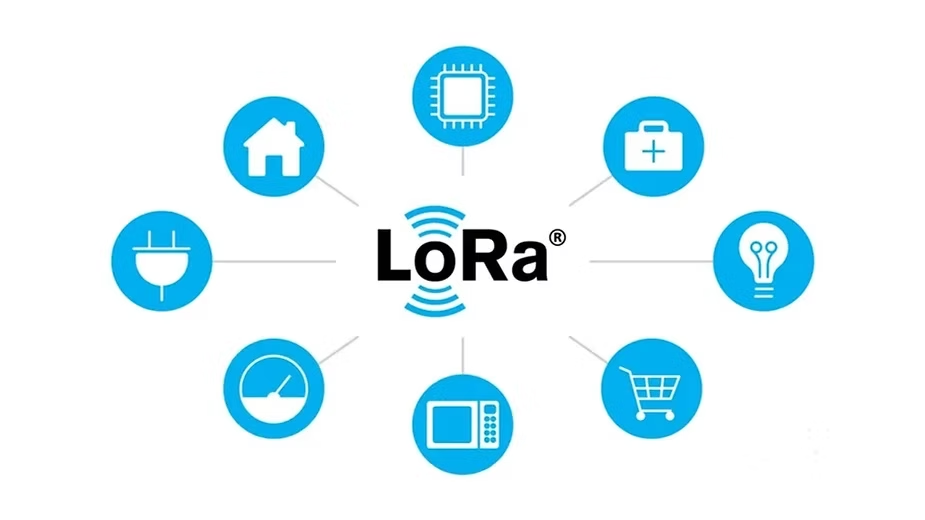
Introduction In today’s connected world, where the Internet of Things (IoT) is transforming industries and daily lives, there’s a growing need for efficient and reliable communication technologies. One such technology that has gained significant traction is LoRa (Long Range). In this blog, we will delve into the vast range of applications and benefits offered by LoRa, as highlighted by Semtech, a leading provider of LoRa technology. I. What is LoRa? LoRa is a low-power, wide-area networking (LPWAN) protocol designed for long-range communication. It enables secure and bi-directional communication between IoT devices and gateways over long distances while consuming minimal power. LoRa operates in unlicensed frequency bands, providing the flexibility needed for widespread deployment. II. Smart Homes LoRa technology has the potential to revolutionize the way home operate, making them smarter and more efficient. By deploying LoRa-enabled sensors and devices, our homes can manage a multitude of issues, from automating routine tasks and optimizing energy consumption to bolstering security and safety. With the integration of smart devices and systems, homeowners can remotely control lighting, climate, and appliances, all through voice commands or mobile apps. Energy efficiency is optimized by monitoring consumption and adjusting systems based on occupancy patterns. Moreover, smart homes prioritize security with connected cameras, sensors, and smart locks, providing real-time monitoring and alerts. As technology continues to evolve, smart homes will likely become even more sophisticated, further transforming the way we interact with and manage our living spaces. III. Industrial Automation LoRa’s long-range capabilities make it ideal for industrial applications. With LoRa-enabled devices, manufacturers can remotely monitor and control machinery, track inventory and assets, and optimize logistics operations. The low power consumption of LoRa devices ensures extended battery life, reducing maintenance efforts and costs. IV. Agriculture In the agricultural sector, LoRa plays a crucial role in enabling smart farming practices. By integrating LoRa sensors into soil moisture probes, weather stations, and livestock monitoring devices, farmers can collect real-time data on soil conditions, weather patterns, and animal health. This data-driven approach allows for precise irrigation, optimized resource allocation, and early detection of potential issues, leading to increased yields and reduced environmental impact. V. Asset Tracking Tracking assets and ensuring their security is a top priority for various industries, including logistics, transportation, and supply chain management. LoRa offers a cost-effective and reliable solution for asset tracking, enabling real-time location monitoring, geofencing, and anti-theft mechanisms. With LoRa, businesses can streamline operations, reduce losses, and enhance customer satisfaction by providing accurate delivery information. VI. Environmental Monitoring With the growing concern for environmental sustainability, LoRa technology is proving invaluable in monitoring and conserving natural resources. By deploying LoRa-based sensors, organizations can collect data on air quality, water pollution, noise levels, and more. This information empowers policymakers and environmental agencies to make informed decisions and take proactive measures to protect our planet. VII. Benefits of LoRa a) Long Range: LoRa devices can transmit data over several kilometers, even in challenging environments, providing extensive coverage. b) Low Power Consumption: LoRa devices are designed to operate on battery power for extended periods, reducing maintenance requirements. c) Scalability: LoRa networks can support thousands of devices, making it suitable for large-scale deployments. d) Cost-Effective: LoRa’s low-cost infrastructure and devices make it an attractive choice for organizations looking to implement IoT solutions. e) Secure: LoRaWAN, the networking protocol for LoRa, ensures end-to-end encryption and authentication, safeguarding sensitive data. Conclusion As the world becomes increasingly connected, LoRa technology is emerging as a powerful enabler for diverse IoT applications. From smart cities and industrial automation to agriculture and environmental monitoring, the versatility and benefits of LoRa are transforming industries and paving the way for a smarter, more sustainable future. Embracing LoRa technology unlocks new possibilities for organizations seeking to optimize operations, reduce costs, and make data-driven decisions in a rapidly evolving digital landscape.
Haq
Mar
4,
20243
min
read
27
0
Is LoRaWAN the Solution to Cellular IoT Challenges?
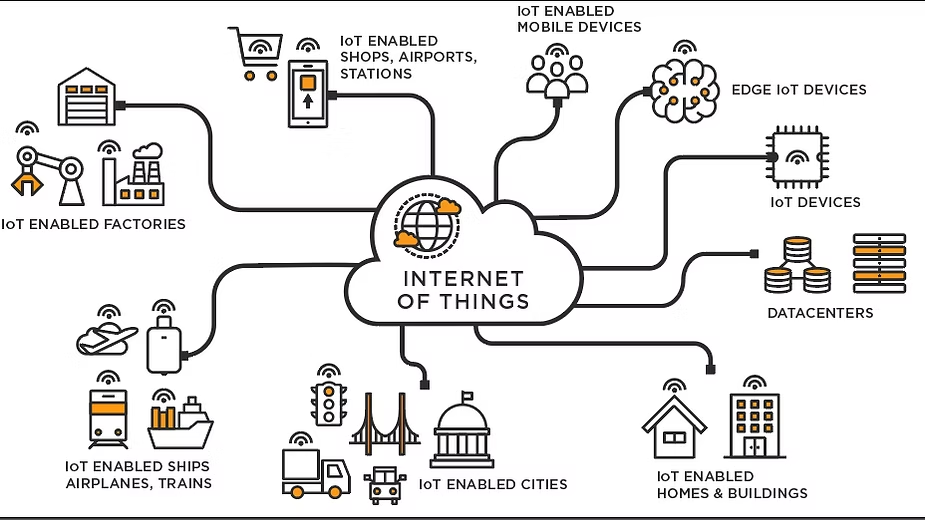
Ten years ago, there was great hope for cellular networks to drive the development of massive-scale IoT. In fact, according to a recent report by Enterprise IoT Insights, Cisco and Ericsson both predicted that by 2020, the market for interconnected devices would reach 50 billion devices. However, the growth of the entire IoT market has been slower than those predictions, with only 12.4 billion IoT devices in circulation at present, more than a year after those forecasts. Nevertheless, LPWAN solutions like LoRaWAN can easily adapt to the needs of IoT applications and have a greater impact on the massive IoT. Massive-scale IoT is composed of a large number of low-complexity, low-cost devices that connect to networks with relatively lower throughput speeds. This combination of sensor devices and networks built specifically for IoT is transforming how enterprises operate, how public infrastructure is monitored, and how organizations implement sustainable development plans. It’s easy to see why there was such high hope for cellular networks ten years ago since cellular connectivity dominated in other types of devices. The infrastructure was already in place, so why couldn’t it be easily leveraged to power massive-scale IoT? It seemed like the development of massive-scale IoT was just a few years away. Then a few more. Always on the horizon. Challenges of Cellular IoT It turns out that the technology needed for large-scale IoT deployments did not exist when these predictions were made. Aside from other challenges, there is a mismatch between infrastructure costs, device battery life requirements, and availability. Cellular operators attempted to connect the predicted billions of devices using technologies that were not specifically built for IoT. In the currently deployed IoT devices, 2G and 3G represent the majority of cellular IoT connections, with 53.1% using one of them. This is problematic because operators are phasing out these legacy technologies, and their replacements are still struggling to gain traction. This year, operators like AT&T and T-Mobile are shutting down their 3G networks, and 2G networks are already outdated in most regions globally, with some parts of Europe following suit. 47% of users have not received notifications about network shutdowns, creating an uncertain path forward. In recent years, as use case requirements have become clearer, low-power wide-area network (LPWAN) technologies, such as NB-IoT and Cat-M1, have seen development. However, even in their most prominent regions, challenges still persist. Take China, for example. According to internal estimates by Sequans, it is the largest and fastest-growing market for NB-IoT and Cat-M1, with 100 million cellular LPWAN chipsets sold in the region in 2020. The rest of the world is estimated to have only 5 million NB-IoT chipsets. In China, data plans and investments in infrastructure have allowed this technology to flourish, but even in China, hardware vendors are struggling to turn a profit. Let’s take a look at three cellular IoT challenges and how LoRaWAN can provide solutions. 1. Expensive Connectivity Infrastructure costs have always been one of the biggest obstacles to deploying massive-scale IoT using cellular networks. Cellular requires expensive infrastructure to support it, including towers that cost over $100,000 to build, expensive gateways, and a significant labor force for network deployment and ongoing management. Due to the inherent deployment model of cellular networks, operators cannot build networks on demand, unlike license-free LPWAN solutions like LoRaWAN, which can easily adapt to the needs of IoT applications. The bill of materials (BOM) cost for LoRaWAN hardware is also lower, reducing the overall infrastructure and solution costs compared to cellular-based solutions. This is not even considering the functional differences in critical areas, such as terminal device power consumption and associated costs in large-scale deployments. The communication profiles of the most common NB-IoT use cases, such as asset tracking, smart metering, and wearable devices, result in high power consumption for cellular devices. Supporting devices with higher power consumption inevitably leads to battery drain, and NB-IoT’s inherent “chattiness” exacerbates this even further. After device deployment, firmware updates for cellular devices typically consume longer battery life compared to LoRaWAN devices, making LoRaWAN a more viable solution for projects that require longer on-site durations. According to Semtech, LoRaWAN has an overall operating power consumption three to five times lower than NB-IoT. The battery life of devices using NB-IoT is also not long-lasting, as ABI Research found that LoRaWAN devices average a battery life extension of over five years, providing longer lifetimes, depending on the use case. A group of researchers from the University of Bologna, University of Trento, and Integrated Systems Laboratory found that based on their experimental data using sensors for monitoring structural integrity, LoRaWAN battery life can be up to 10 times longer than NB-IoT in certain applications. 2. Inconsistent Coverage and Limited Choices Due to delayed deployments of NB-IoT and Cat-M1, cellular IoT solutions have yet to be deployed on a large scale. However, LoRaWAN is experiencing rapid growth due to the flexibility of its deployment model and increasing interoperability among network operators, which will come together to provide global coverage in the near future. According to data from the LoRa Alliance, there are now over 160 countries with public LoRaWAN networks, while according to GSA data, 64 countries have NB-IoT or LTE-M operators. The lack of networks and interoperability issues make it more challenging to manage deployments across locations using cellular IoT technology. On the other hand, the LoRaWAN network is experiencing significant growth. With integration between various ground networks and satellite connectivity, as well as advancements like LoRa Alliance’s LR-FHSS transmission data rate, collaborations such as the MultiTech MultiTech MultiMode IoT Connectivity (MMIIC) are paving the way for achieving 100% global coverage by 2022. Moreover, certified cellular terminal devices have been slow to market and have been negatively affected by the mentioned phasing out of 2G and 3G. In contrast, the LoRa Alliance offers a robust device certification program that provides end users with confidence that terminal devices supporting sensors are compliant with the LoRaWAN specification. Device compliance ensures proper behavior on the network, reduces support costs, and prevents failures when higher-cost fixes are needed in the future. Such policies and regulations will greatly contribute to ensuring the reliability of terminal devices expected to last for decades in the field. Some operators have even abandoned NB-IoT, like NTT DoCoMo and Dish Network did last year, focusing instead on Cat M1, LTE-M, and 5G, respectively. There is a lot of confusion about which cellular technology will prevail, and it’s anyone’s guess—even among mobile network operators. 3. 5G is Not the Solution NB-IoT and Cat M1 are 4G technologies compatible with 5G, so they are riding on the hype around 5G. With the sunset of 2G and 3G approaching, 5G positions itself as the solution to fill the gap when over half of the current cellular IoT connections no longer function. However, to date, enterprise adoption has been minimal, with only 290 publicly disclosed private 5G networks deployed globally, and a noticeable decline in the application of 5G spectrum. While 5G supports NB-IoT and Cat M1 as cellular solutions for large-scale IoT deployments, they still have a long way to go to fill the gap. In the long run, several IoT technologies will coexist to maximize return on investment for IoT deployments. Cellular technologies will support use cases that require continuous communication, higher data rates, or lower latency, while LoRaWAN will serve as the primary technology for use cases that require long-range, deep indoor penetration, battery-powered devices, and coverage in challenging environments, as well as implementations that require a mix of public and private networks. Connecting the Unconnected with LoRaWAN LoRaWAN is poised to provide the cost structure and flexibility needed for large-scale IoT deployments. It offers longer range, extended battery life, better propagation characteristics, and more power-efficient maintenance, which combined can effectively support a broader range of use cases. These are some of the reasons why ABI Research predicts that by 2026, LoRaWAN will account for over half of all non-cellular LPWAN connections. The range of LoRaWAN is particularly crucial as it can reach environments where cellular signals struggle to penetrate or where cellular infrastructure is lacking. From rural and rugged environments to indoor spaces and even deep within solid structures, LoRaWAN’s propagation characteristics benefit everywhere. Security is another key differentiating factor, as cellular signals are susceptible to interception as they hop from one point to another on the network. LoRaWAN provides end-to-end security built into the protocol. LoRaWAN also supports public, private, and hybrid models, offering great flexibility in how enterprises deploy network infrastructure. With over 500 members collaborating closely to advance an open global protocol, LoRa Alliance’s commitment aims to support this field for over two decades, compared to the five-year cycles of introducing new and deprecating old protocols by 3GPP. The International Telecommunication Union (ITU) recently approved LoRaWAN as a global standard for LPWAN, further solidifying LoRaWAN’s position as a reliable, open standard. Endgame Trailblazers are paving the way for the latest predictions of 1 billion LoRaWAN devices by 2025 for IoT analytics. They have the innovation, deployment models, and partnerships that the cellular market still lacks. As LoRaWAN is used with sensors that detect the physical world, sensors that can last over a decade and be updated over the air, customers are free to explore endless use cases and benefit from the insights their data can generate. The potential of massive-scale IoT is finally being unleashed.
Haq
Mar
4,
20243
min
read
27
0
A Complete Summary of IoT Communication Protocols
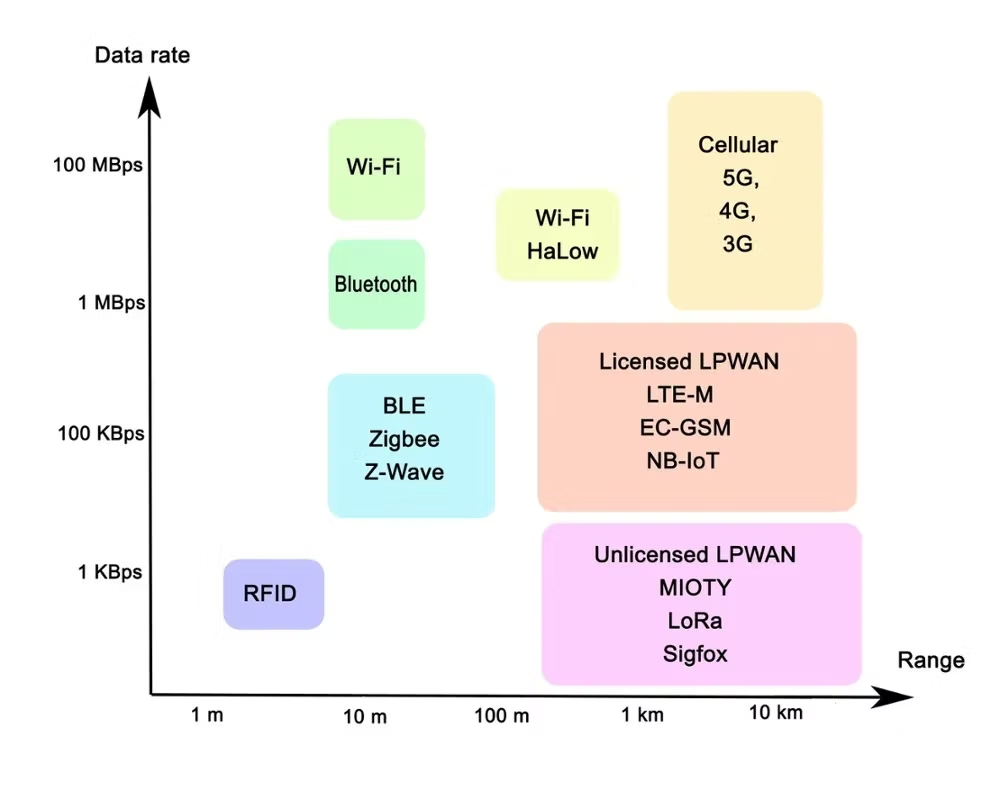
With the continuous increase in the number of IoT devices, communication or connectivity between these devices has become an important consideration. Communication is essential for the development of the IoT, whether it is short-range wireless transmission technology or mobile communication technology. In communication, communication protocols are particularly important as they define the rules and agreements that entities must follow to complete communication or provide services. This article introduces several available IoT communication protocols, each with different performance, data rates, coverage ranges, power requirements, and memory usage. Each protocol has its own advantages and, to some extent, disadvantages. Some communication protocols are only suitable for small household appliances, while others can be used for large-scale smart city projects. IoT communication protocols can be divided into two main categories: Access protocols: Typically responsible for networking and communication between devices within a subnet. Communication protocols: Mainly run on top of the traditional Internet TCP/IP protocol and are responsible for data exchange and communication between devices over the Internet. A. Physical Layer and Data Link Layer Protocols 1. Long-Range Cellular Communication (i) 2G/3G/4G Communication Protocols: Referring to the second, third, and fourth-generation mobile communication system protocols. (ii) NB-IoT (Narrowband Internet of Things): NB-IoT is an important branch of the Internet of Things network. It is built on cellular networks and consumes only about 180kHz of bandwidth. It can be deployed directly on GSM, UMTS, or LTE networks to reduce deployment costs and achieve smooth upgrades. NB-IoT focuses on the Low-Power Wide-Area (LPWA) IoT market and is an emerging technology that can be widely applied globally. It has the characteristics of wide coverage, multiple connections, fast data rates, low cost, low power consumption, and excellent architecture. Application scenarios: NB-IoT network enables applications such as smart parking, smart firefighting, smart water management, smart streetlights, bike sharing, and smart home appliances. (iii) 5G: The fifth-generation mobile communication technology is the latest generation of cellular mobile communication technology. 5G aims to achieve high data rates, reduced latency, energy savings, cost reduction, increased system capacity, and massive device connectivity. Application scenarios: AR/VR, connected vehicles, smart manufacturing, smart energy, wireless healthcare, wireless home entertainment, connected drones, ultra-high-definition/panoramic live streaming, personal AI assistants, smart cities. 2. Long-Range Non-Cellular Communication (i) **WiFi: **Due to the rapid popularity of home WiFi routers and smartphones in recent years, the WiFi protocol has also been widely used in the smart home field. The biggest advantage of WiFi protocol is direct access to the Internet. Compared to ZigBee, WiFi-based smart home solutions eliminate the need for additional gateways, and compared to Bluetooth protocols, they eliminate the dependence on mobile terminals such as smartphones. The commercial deployment of WiFi in public places such as urban public transportation and shopping malls demonstrates the potential of WiFi in public coverage. (ii) ZigBee: ZigBee is a low-speed short-range wireless communication protocol, which is a reliable wireless data transmission network. Its main features include low speed, low power consumption, low cost, support for a large number of network nodes, support for various network topologies, low complexity, fast and reliable operation, and security. ZigBee technology is a new type of technology that relies on wireless networks for transmission and can establish wireless connections at close distances. ZigBee’s inherent advantages have made it a mainstream technology in the IoT industry, with large-scale applications in industrial, agricultural, and smart home fields. (iii) LoRa: LoRa™ (Long Range) is a modulation technology that provides longer communication distances compared to similar technologies. LoRa is widely used in various IoT products, including LoRa gateways, smoke detectors, water monitoring, infrared detection, positioning, and smart plugs. As a narrowband wireless technology, LoRa uses time difference of arrival for geolocation. LoRa positioning applications include smart cities and traffic monitoring, metering and logistics, and agricultural monitoring. 3. Short-Range Communication (i) RFID: Radio Frequency Identification (RFID) is a technology that uses radio waves to identify and track objects. It is commonly used for inventory management, access control, and asset tracking. (ii) NFC: Near Field Communication (NFC) is a short-range wireless communication technology that allows devices to establish communication by bringing them close together. NFC has features such as human-to-machine and machine-to-machine interactions. (iii) Bluetooth: Bluetooth technology is a global standard for wireless data and voice communication. It provides a special type of short-range wireless technology based on low-cost connections for fixed and mobile devices. Bluetooth enables wireless information exchange between various devices, including mobile phones, PDAs, wireless headphones, laptops, and related peripherals. By using Bluetooth technology, communication between mobile communication terminals and Internet devices can be simplified, resulting in faster and more efficient data transmission and expanding the possibilities of wireless communication. 4. Wired Communication (i) USB: USB (Universal Serial Bus) is an external bus standard that specifies the connection and communication between computers and external devices. It is widely used in the PC domain as an interface technology. (ii) Serial Communication Protocol: The serial communication protocol specifies the contents of the data packets, including start bits, payload data, parity bits, and stop bits. Both parties must agree on a consistent data packet format to communicate properly. Common protocols in serial communication include RS-232, RS-422, and RS-485. Serial communication refers to the communication between peripheral devices and computers using bit-by-bit data transmission. This communication method uses fewer data lines and can save communication costs in long-distance communication, but its transmission speed is lower than parallel transmission. Most computers (excluding laptops) have two RS-232 serial ports. Serial communication is also a commonly used communication protocol in instrument and equipment industries. (iii) Ethernet: Ethernet is a computer local area network (LAN) technology. The IEEE organization’s IEEE 802.3 standard defines the technical standards of Ethernet, including the physical layer wiring, electronic signals, and media access control protocols. (iv) MBus: MBus (Meter-Bus) is a two-wire bus widely used for remote meter reading systems, such as heat meters and water meters, based on European standards. B. Network Layer and Transport Protocols IPv4: Internet Protocol version 4 is the fourth version of the Internet Protocol, which is the first widely deployed version in the protocol’s development process. IPv4 is the core of the Internet and the most widely used version of the Internet Protocol. IPv6: Internet Protocol version 6 is developed to address the limited network address resources of IPv4, which significantly restricts the application and development of the Internet. IPv6 solves the problem of network address resource scarcity and enables the connection of multiple devices to the Internet. TCP: Transmission Control Protocol is a connection-oriented, reliable, byte-stream-based transport layer communication protocol. TCP is designed to adapt to the layered protocol hierarchy that supports multiple network applications. TCP provides reliable communication services between pairs of processes in computers connected to different but interconnected networks. TCP assumes that it can obtain a simple, possibly unreliable data packet service from a lower-level protocol. 6LoWPAN: 6LoWPAN is an IPv6-based low-power wireless personal area network standard, specifically IPv6 over IEEE 802.15.4. C. Application Layer Protocols MQTT Protocol: MQTT is a publish-subscribe communication protocol commonly used in machine-to-machine (M2M) communication and the Internet of Things (IoT). It is widely used in various applications, including satellite communication between sensors, occasional dial-up medical devices, smart homes, and small-scale devices. CoAP Protocol: CoAP (Constrained Application Protocol) is a lightweight web-like protocol for constrained devices and constrained networks in the IoT world. It is suitable for small, low-power sensors, switches, valves, and similar components that require remote control or monitoring via standard Internet networks. CoAP does not respond to unsupported types. REST/HTTP Protocol: RESTful is a resource-based software architectural style. Resources refer to specific information or entities on the network, such as images or songs. RESTful APIs are implementations based on the HTTP protocol (an application-layer protocol known for its simplicity and speed). Applications or designs that conform to the REST specification are called RESTful, and APIs designed according to the REST specification are called RESTful APIs. DDS Protocol: DDS (Data Distribution Service) is a middleware protocol for distributed real-time data distribution services. It acts as a “bus on the bus” in distributed real-time networks, facilitating the interconnection of network protocols. It plays a role similar to TCP/IP in real-time networks. AMQP Protocol: AMQP (Advanced Message Queuing Protocol) is an application layer standard for a message-oriented middleware that provides unified messaging services. It is an open standard for application layer protocols and enables messaging between clients and message-oriented middleware without being restricted by different client/middleware products or programming languages. Examples of AMQP implementations include RabbitMQ, which is implemented in Erlang. XMPP Protocol: XMPP (Extensible Messaging and Presence Protocol) is a protocol based on a subset of the XML standard, inheriting the flexibility of XML in an evolving environment. XMPP-based applications have great scalability. Extended information can be sent to meet user needs and establish applications such as content publishing systems and address-based services on top of XMPP. D. Comparison of Some Communication Protocols 1. Comparison of NB-IoT and LoRa Protocols Firstly, in terms of frequency bands, LoRa operates in unlicensed bands below 1GHz, which does not require additional fees for application. On the other hand, NB-IoT and cellular communication using bands below 1GHz require licensing and incur fees. Secondly, in terms of battery life, LoRa modules have unique features in dealing with interference, network overlap, and scalability. However, NB-IoT, due to considerations of service quality, cannot provide the same battery life as LoRa. Thirdly, in terms of device cost, LoRa protocol is simpler and easier to develop for terminal nodes. It has better compatibility with microprocessors. Low-cost and technically mature LoRa modules are already available in the market, with upgraded versions being released gradually. Fourthly, regarding network coverage and deployment schedule, the NB-IoT standard was announced in 2016, and besides network deployment, additional time and effort are needed to establish commercialization and the industrial chain. The entire industrial chain of LoRa is relatively mature, and products are in a state of “waiting for takeoff.” Many countries worldwide are conducting or have completed nationwide network deployments. 2. Comparison of Bluetooth, WiFi, and ZigBee Protocols Currently, WiFi’s advantage lies in its widespread application, already reaching millions of households. ZigBee’s advantage lies in its low power consumption and self-organizing network capabilities. Ultra-Wideband (UWB) technology excels in transmission rate. Bluetooth’s advantage is easy networking. However, these three technologies also have their limitations, and none of them can fully meet all the requirements of smart homes. Bluetooth technology enables short-range wireless communication, but its protocol is more complex, consumes more power, and has higher costs, making it less suitable for applications that require low cost and low power consumption in industrial control and home networking. One of the biggest obstacles for Bluetooth is its limited transmission range, usually around 10 meters. It also has limited resistance to interference and information security issues, which hampers its further development and large-scale applications. WiFi is also a short-range wireless transmission technology that can provide instant access to wireless signals with high mobility, making it suitable for applications in offices and homes. However, WiFi has a fatal drawback. As WiFi uses radio frequency technology to transmit data signals through the air, it is susceptible to external interference. ZigBee is an internationally recognized wireless communication technology that allows each network port to connect to over 65,000 endpoints. It is suitable for various fields, including homes, industries, agriculture, etc. ZigBee has the advantages of low power consumption and low cost. 3. Comparison of MQTT and CoAP Protocols MQTT is a many-to-many communication protocol used for message transmission between different clients through intermediate brokers. It decouples producers from consumers, allowing clients to publish messages and letting the broker handle routing and message copying. Although MQTT supports some level of persistence, it is best used as a real-time data communication bus. CoAP, on the other hand, is primarily a point-to-point protocol used for transferring status information between clients and servers. While it supports observing resources, CoAP is best suited for a state transfer model rather than event-driven operations. MQTT clients establish long-lived TCP connections, which usually pose no issues. CoAP clients and servers, on the other hand, send and receive UDP datagrams. In NAT environments, tunnels or port forwarding can be used to allow CoAP or similar types of devices such as LWM2M to initialize frontend connections. MQTT does not provide support for message typing or other metadata to aid client understanding. MQTT messages can be used for any purpose, but all clients must know the upstream data format to enable communication. CoAP, on the contrary, provides built-in support for content negotiation and discovery, allowing devices to probe each other to find the best way to exchange data. Both protocols have their advantages and disadvantages, and the choice depends on the specific application. In conclusion, the selection of IoT communication protocols depends on various factors, including the specific use case, network requirements, power consumption, coverage range, and cost considerations. Each protocol has its strengths and weaknesses, and understanding the characteristics of different protocols is essential to make informed decisions when designing and implementing IoT solutions.
Haq
Mar
4,
20243
min
read
27
0

LoRa's 7th Year in China: What's New in the Market?
In 2005, the International Telecommunication Union officially introduced the concept of the “Internet of Things” (IoT), which is considered the third wave of the world’s information industry after computers and the internet. With the commercial deployment of 5G and the phasing out of 2G, there is an increasing demand for low-rate, low-power wireless connectivity. The emergence of low-power wide-area networks represented by LoRa perfectly fills the gap in the market for low-power wireless connectivity. Since 2014, the first batch of domestic companies in China started developing LoRa-related products. After 7 years of development, LoRa has evolved from a wireless technology used in a small range to a well-known standard in the field of IoT. Its application areas and scope have also expanded continuously. So, what are the new changes in the market as LoRa enters its 7th year in China? Introduction of a new LoRa private network protocol in China This year, the global market for LoRa has been rapidly expanding. According to data released by Semtech at the 2021 LoRa Innovation Application Forum, over 2.2 million LoRa-based gateways and more than 280 million LoRa-based end nodes have been deployed worldwide. LoRa or LoRaWAN deployments have covered 171 countries and regions. It is estimated that by 2026, 50% of LPWAN IoT solutions will use LoRa. Compared to the data from January 2020, global deployments of LoRa gateways have grown 1.75 times, and the number of LoRa-based end nodes has doubled from last year. Additionally, 14 more countries and regions have started deploying LoRa or LoRaWAN. The rapid development of LoRa can also be seen from the financial performance of Semtech, the company that contributes the most to LoRa infrastructure. Semtech’s financial report for the second quarter of the 2022 fiscal year showed a record-breaking net sales of $185 million, a 29% increase compared to the previous year. Signal integrity new products accounted for 39% of the revenue, wireless and sensing products accounted for 34%, and protection products accounted for 27%. It is worth mentioning that due to the rapid development of LoRa in the Chinese market, surpassing other countries and regions, the existing LoRaWAN protocol is no longer able to meet the demands of the Chinese market for LoRa. In response to this, Semtech has developed a new LoRa private network protocol specifically for the Chinese market. “This protocol and solution will be provided free of charge to LoRa ecosystem partners to support everyone in achieving the best results and help projects land as soon as possible,” said Zhang Hui, a representative from Semtech. Furthermore, at the 2021 LoRa Innovation Application Forum, Semtech made commitments to the Chinese market, including strengthening research and development and technical support to meet the evolving needs of Chinese customers, introducing end-to-end solutions to reduce customer product development cycles and costs, and expanding the capabilities of the supply chain to ensure leading product quality and minimize risks and losses resulting from trade disputes. Industrial market growth and increasing specialized application scenarios LoRa is not the only dominant player in the field of low-power wide-area networks, but its rapid expansion in the Chinese market is mainly due to its self-organizing, secure, and controllable features, as well as its long-range, low-power, and anti-interference technical characteristics. These features have led to successful implementations in many new vertical domains during LoRa’s 7th year of development in China. According to Gan Quan, the Director of Market Strategy at Semtech, the three major characteristics of LoRa networks align with the Chinese context. “Firstly, we can build our own network without relying on any operators or other technologies. We can establish a network ourselves and deploy it flexibly according to business models and requirements. Self-organizing networks can be combined with other networks, including 4G and 5G, to set up gateways wherever the signal is weak.” “The second characteristic is security. As a physical layer communication technology, we only discuss the security of physical data transmission. Among the wireless communication technologies that people have seen and heard of, LoRa is the most secure and least susceptible to eavesdropping due to its transmission signal extension beneath the entire noise floor.” “The third characteristic is the controllable low-power nature of LoRa, and chip supply and design are also controllable. In addition to Semtech, ST and Shanghai Aojie can also supply LoRa chips.” Based on these three major characteristics, LoRa has experienced rapid growth in the field of industrial control in the past year. It has also begun to venture into new areas such as wearable devices, delivery robots, satellite communications, and remote control devices. One such example is delivery robots. For delivery robots in hotels and restaurants, both positioning technology and wake-up technology are essential. However, with numerous rooms in hotels and restaurants, relying solely on Wi-Fi connections makes it difficult to achieve seamless coverage. Moreover, the abundance of Wi-Fi devices can significantly impact the connectivity, making it challenging to maintain signal stability for delivery robots. “We need a technology that ensures signal stability and anti-interference capabilities. This is where many robot manufacturers use LoRa for coverage. With just one gateway deployed, the entire area can be covered. Users or staff only need to press a LoRa transmitter or a small button to control the movement of the robot,” explained Gan Quan. In special environments like mountain marathons, LoRa technology is also applied in smart wearable devices. Mountain marathons often take place in areas without operator coverage, and setting up base stations can be time-consuming and labor-intensive. However, by simply installing an antenna on a control vehicle, LoRa networks can track athletes’ physical condition and location within a range of tens of kilometers, ensuring their safety. It is worth mentioning that the long-distance transmission feature of LoRa has found its latest application. “People often ask me how far LoRa can transmit. I now answer this question by saying that, under policy conditions and compliance with national standards, LoRa can transmit at least to satellites. As a result, many satellite companies have approached us, hoping to deploy LoRa gateways on satellites,” added Gan Quan. To accommodate this, Semtech has introduced the new LoRa physical layer LR-FHSS to adapt to satellite or ultra-large-capacity environments. According to reports, LoRa satellite costs are low, network configuration is simple, and devices operating at normal frequencies and transmission power can communicate with LoRa low-earth-orbit satellites within a range of 600 to 1600 kilometers. “We hope that the ecosystem will continue to develop, with an increasing number and variety of LoRa chip suppliers. For example, with the development of the Internet of Things, there may be more opportunities for integration, such as LoRa + Wi-Fi, LoRa + Bluetooth, and so on,” said Zhang Hui.
Haq
Mar
4,
20243
min
read
27
0
Applications of LoRa Wireless Technology in Smart Agriculture IoT
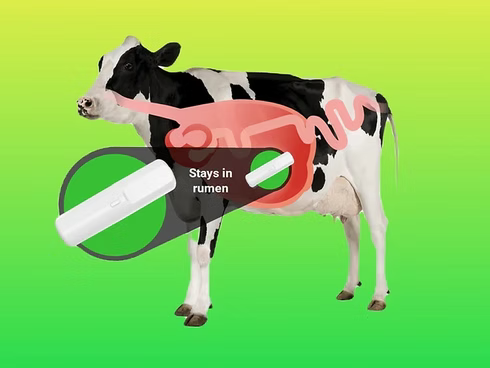
Introduction: The Internet of Things (IoT) has revolutionized various industries, and one area where it has immense potential is smart agriculture. With the advent of LoRa (Long Range) wireless transmission technology, the development of IoT applications in agriculture has become more efficient and effective. This blog explores the applications of LoRa technology in the context of smart agriculture and its benefits. LoRa Technology and its Advantages: LoRa, as a low-power wide-area network (LPWAN) technology, has gained significant attention in recent years. It offers long-range communication capabilities, making it ideal for large-scale and geographically diverse agricultural environments. Its outstanding features include high performance, long-distance coverage, low power consumption, support for large-scale networks, and distance measurement and localization capabilities. This combination of features makes LoRa an ideal choice for the widespread adoption of IoT applications in agriculture. Scenario 1: Greenhouse Cultivation Large-scale greenhouse cultivation often requires significant manpower and time-consuming manual management, which is prone to human errors. By implementing an IoT system, a significant amount of time and effort can be saved for managers, leading to increased efficiency. With the same workforce, multiple greenhouses can be managed effectively, ensuring precise cultivation techniques, enhancing crop quality, and increasing overall yield. Through an intelligent control system, crops can receive precise water and fertilizer supply based on their specific needs. This approach helps conserve water and fertilizers, reduces resource wastage, prevents damage to the soil caused by excessive usage, and promotes energy efficiency. Furthermore, it reduces the pollution caused by excessive use of chemical fertilizers, enhances the quality of agricultural products, and contributes to energy conservation, emission reduction, environmental protection, and the development of a low-carbon economy, thereby yielding significant social benefits. Scenario 2: Aquaculture The integration of modern aquaculture IoT, remote monitoring and control of aquaculture facilities, mathematical modeling for ecological aquaculture, B2B supply chain platforms for fishing resources, and online marketplaces for fresh aquatic products has led to the development of “Fisherman’s Wisdom,” a modern aquaculture service platform and mobile application. The platform utilizes intelligent aquaculture water monitoring terminals that collect data such as water quality indicators (COD, pH, ammonia nitrogen, dissolved oxygen, residual chlorine, turbidity, suspended solids, chlorophyll, blue-green algae, ions), water temperature, and water levels. These data serve as the foundation for advanced analysis, allowing for centralized monitoring, remote control, real-time data queries, anomaly alerts, and display on large screens. Scenario 3: Cattle Health Management Inivec’s Cattle Capsule revolutionizes the field of animal husbandry by introducing a groundbreaking approach to gathering and analyzing vital data without causing any stress to the animals. Simply put, this innovative capsule is inserted into the cattle, residing within the rumen, and continuously monitors the animal’s well-being. By harnessing advanced sensor technology and artificial intelligence, the capsule can accurately detect and measure various essential indicators, including real-time body temperature, orientation, eating habits, steps taken, pH value, and numerous other factors. The implementation of the Cattle Capsule brings significant advantages in the early detection of diseases, identification of abnormal behaviors, monitoring sub-estrus periods, and predicting calving time. This breakthrough technology provides animal owners and caretakers with a powerful tool to proactively manage the health and reproductive cycles of their livestock. Inivec’s Cattle Capsule represents a remarkable advancement in animal husbandry practices. By employing a non-contact and stress-free method, this innovative product allows for seamless and accurate data collection, leading to enhanced animal welfare, improved disease management, and increased efficiency in the farming industry. With the Cattle Capsule, farmers can proactively address health concerns and optimize breeding strategies, ultimately leading to healthier and more productive herds. Conclusion: LoRa technology holds immense potential for revolutionizing smart agriculture. From optimizing greenhouse cultivation to modernizing aquaculture practices and revolutionizing cattle health management, the applications of LoRa in agriculture are diverse and promising. By embracing IoT solutions powered by LoRa, farmers and agriculturalists can enhance efficiency, conserve resources, improve product quality, and ultimately contribute to a sustainable and thriving agricultural industry. The era of smart agriculture powered by LoRa has arrived, bringing us closer to a more connected and productive future.
Haq
Mar
4,
20243
min
read
27
0
