






.png)


Eliza AI: Pioneering the Future of Wearable Voice Assistance
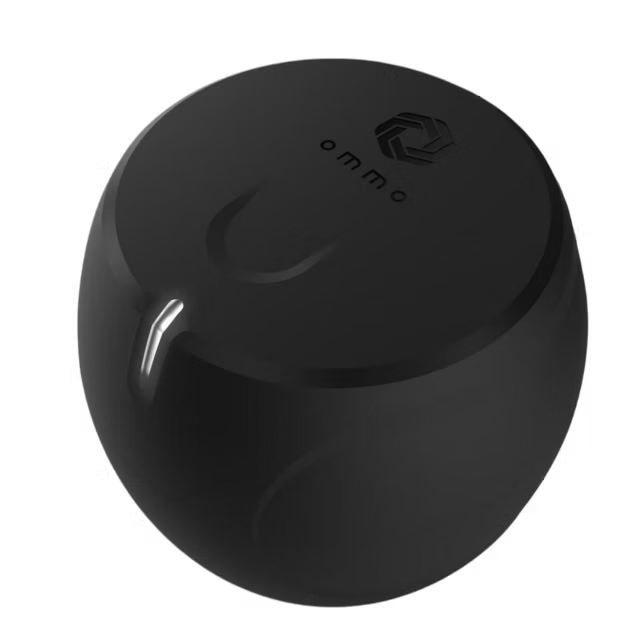
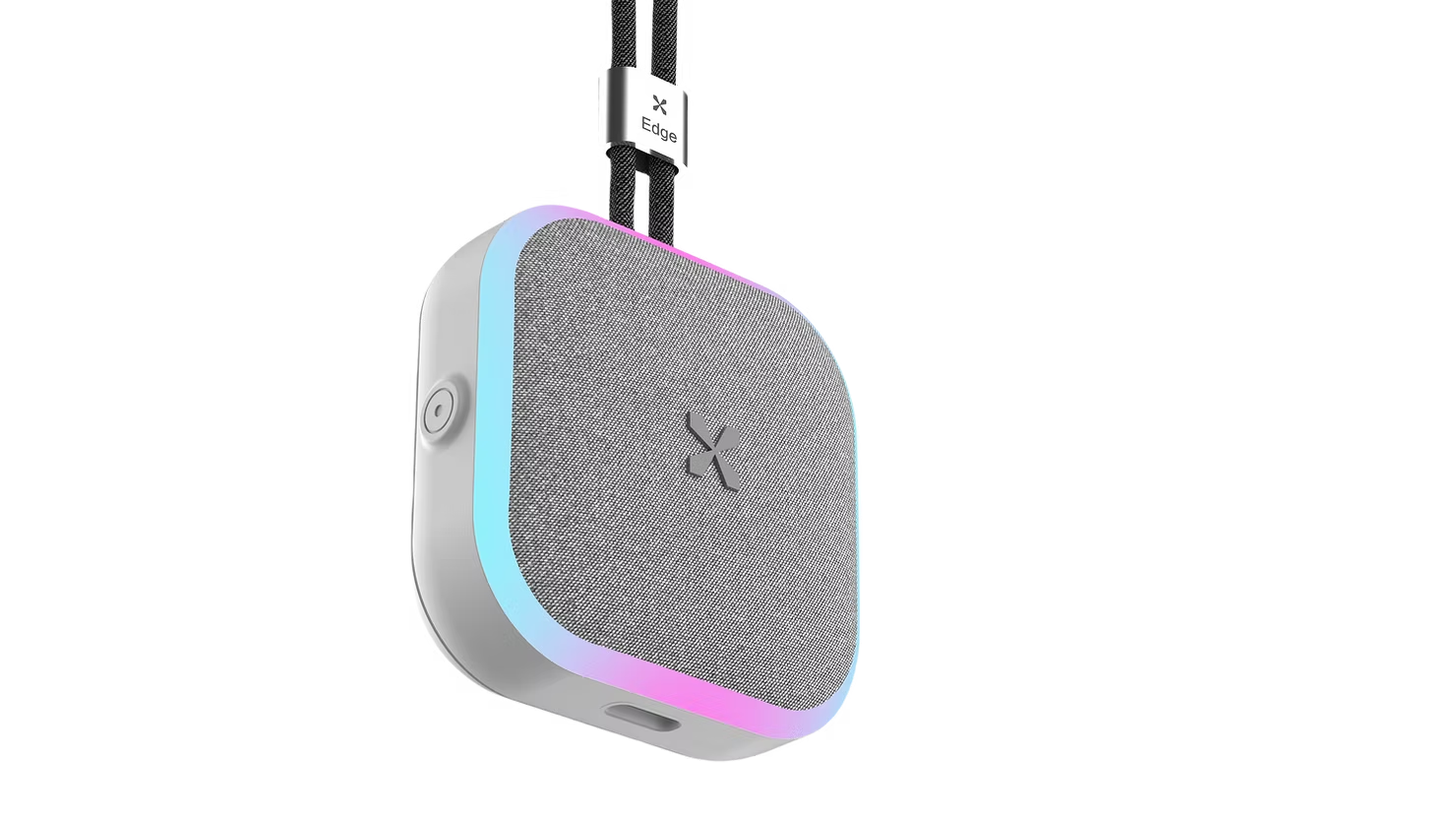
In the ever-evolving landscape of artificial intelligence, Eliza AI emerges as a groundbreaking innovation, seamlessly blending advanced technology with everyday functionality. This portable, AI-powered voice assistant is not just a gadget; it’s a companion designed to enhance communication, entertainment, and home automation experiences. What’s more, its versatility extends to children’s plush toys, making it the perfect interactive companion for younger users. A Glimpse into the Future: Eliza AI’s Technological Backbone Eliza AI is powered by Alibaba Cloud’s Qwen 2.5-Max model, a state-of-the-art large language model (LLM) that surpasses its predecessors in performance. With capabilities that rival models like GPT-4o and DeepSeek-V3, Qwen 2.5-Max offers advanced natural language understanding, multi-turn conversations, and real-time streaming responses across text, audio, and video formats. This robust AI foundation enables Eliza to deliver context-aware interactions, making conversations more intuitive and engaging. Whether you’re seeking information, controlling smart home devices, or enjoying personalized entertainment, Eliza’s advanced AI ensures a seamless experience. Design Meets Functionality: The Wearable Assistant Eliza AI’s design is a testament to the fusion of style and practicality. Resembling a sleek, necklace-like pendant, it houses a suite of features: Noise Reduction & Echo Cancellation: Ensures clear audio quality in various environments. Automatic Gain Control: Maintains consistent audio levels for optimal listening. Low-Power Consumption: Supports extended usage, making it ideal for outdoor activities. These design elements cater to a diverse audience, including children, young adults, the elderly, and smart home users, providing a versatile solution for various needs. Targeted User Experience Eliza AI is perfect for multiple demographics: Children: The wearable design makes Eliza an ideal companion for younger users, fostering creativity, learning, and entertainment in a fun way. Young Adults and Elderly: Eliza serves as a great communication aid, connecting users with their loved ones, assisting with daily tasks, and providing entertainment and smart home control. Smart Home Users: As part of your smart ecosystem, Eliza integrates easily into your home, enabling voice control for smart devices and improving the overall convenience of home automation. Plushy Toy Integration: Bringing Eliza to Kids Eliza AI is not just a wearable device; it’s also perfect for use in plush toys, making it an excellent companion for children. Imagine a soft, cuddly toy that comes to life with interactive voice responses. By integrating Eliza AI technology into plush toys, children can engage in conversations, hear stories, and enjoy personalized entertainment in a safe, fun, and educational way. The plush toy version of Eliza could provide: Interactive Learning: Kids can learn new things, engage in storytelling, and even get assistance with basic education tasks, all through their favorite stuffed animal. Entertainment: Eliza could act as a source of fun and engaging stories, songs, and games, making learning an enjoyable experience. Comfort & Communication: For younger children, having an AI-powered plush companion can help them feel comforted, while also allowing parents to monitor and control content and interactions. By merging advanced AI technology with the warmth and safety of a plush toy, Eliza becomes more than just a tool, it becomes a valuable companion for children’s growth and entertainment. Eliza AI vs. Smartphone AI Apps: What’s the Difference? While smartphone-based AI apps, such as ChatGPT or Google Gemini, offer convenience for on-the-go voice assistance, Eliza AI sets itself apart in several key areas: Wearable and Seamless Integration: Unlike smartphone apps that require you to unlock your phone and interact through a screen, Eliza AI is always within reach. Worn as a necklace or integrated into a plush toy, Eliza allows for instant, hands-free voice interactions, making it ideal for those moments when you’re too busy to pick up your phone or when you want a more immersive, constant presence. Tailored Experiences for Children: Smartphone AI apps typically cater to adults, whereas Eliza AI can be specially designed to suit the needs of younger users. Through its plush toy integration, Eliza offers educational and interactive experiences that are more engaging and child-friendly compared to standard phone apps. AI-Powered Smart Home Control: While smartphone AI apps can control smart devices, Eliza AI is specifically optimized for continuous voice-based home automation. It offers more reliable, hands-free control over your smart home ecosystem, whether you’re managing lights, music, or thermostats without having to reach for your phone. Specifications That Speak Volumes Delving into the technical specifications: Chipset: ESP32-S3 modem with 4MB Flash and 2MB RAM. Connectivity: Supports Wi-Fi and Bluetooth 5.0 for seamless integration with other devices. Audio: Equipped with a 2W speaker delivering high-quality sound. Power: Offers 3-4 hours of continuous voice interaction with low standby current. Portability: Compact dimensions (57mm x 57mm x 25mm) and lightweight (50g) for easy wearability. Certifications: CE, FCC, ISED, and UKCA certified, ensuring global compatibility. These specifications underscore Eliza’s commitment to delivering a high-performance, user-friendly experience, whether as a wearable voice assistant or integrated into a plush toy for children. The Legacy of ELIZA: From Past to Present The name “Eliza” pays homage to the original ELIZA program developed in the 1960s, one of the earliest examples of natural language processing. While ELIZA simulated conversation through pattern matching, modern advancements have transformed this concept into sophisticated AI systems capable of understanding and interacting with users in meaningful ways. Conclusion: Eliza AI – Your Intelligent Companion Eliza AI represents a significant leap forward in wearable technology, combining advanced AI capabilities with thoughtful design to create a truly intelligent companion. Whether you’re looking to enhance communication, streamline tasks, or enjoy personalized entertainment, Eliza AI offers a versatile solution tailored to modern lifestyles. For children, Eliza in plush toy form brings the magic of AI to life, offering a fun, interactive, and educational experience. Moreover, with its seamless integration into daily life, Eliza provides a hands-free, immersive experience that goes beyond what traditional smartphone AI apps offer. As an everyday companion, Eliza transforms how you manage your routine, interact with technology, and stay connected.
Apr 23, 2024
Choosing the Perfect LoRa Product for Your IoT Needs
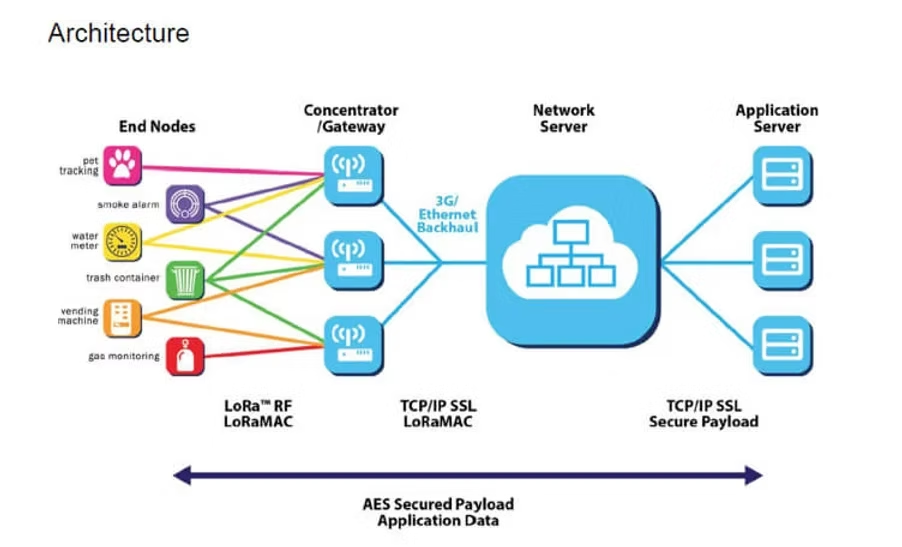
Introduction In the ever-evolving landscape of IoT communication technology, LoRa has emerged as a standout solution, offering exceptional benefits such as long-range connectivity and low power consumption. LoRaWAN, with its numerous advantages like high capacity, global standards, cost-effectiveness, and flexibility, has become the go-to choice for private IoT networks. With the surge in interest from domestic enterprises and educational institutions, selecting the most suitable LoRa product is pivotal for shaping the top-tier design of IoT systems. Let’s delve into the key factors that can guide your decision-making process. 1. Communication Range: The Heart of IoT Connectivity The cornerstone of LoRa’s success lies in its impressive communication range. The communication distance between the farthest node and the gateway defines the network’s scope. Terrain and environmental factors heavily influence this distance, leading to variations like 40km for high-altitude balloon communication, 2km for hilly or tower-rich landscapes, and 5km for more open areas. While the “open viewing distance” provides a general guideline, other environments require on-site measurements. For scenarios where communication distance falls short, three strategies can enhance connectivity: Adjust Communication Rate: Lowering the communication rate can improve reception sensitivity. Optimize Antenna Configuration: Swapping to a high-gain antenna and optimizing its orientation can extend coverage. Increase Gateway Density: Adding more gateways effectively covers signal dead zones, enhancing overall network reach. A fascinating method developed by LinkLabs enables distance calculation using variables, offering an automated estimate of effective communication range. 1.2 Scale: Quantifying the Network’s Scope Scale, often referred to as the “number of nodes,” plays a straightforward role in network sizing. 1.3 Bandwidth: Balancing Data Throughput The required bandwidth, synonymous with network throughput, is measured in “bits per second.” For instance, if you have 100 nodes, each transmitting 60 bytes every 37 seconds, accounting for metadata addition, the bandwidth calculation would be crucial to ensuring efficient data transfer. 1.4 Power Consumption: The Efficiency Imperative When terminal devices and sensors rely on battery power, energy efficiency becomes a critical factor. LoRaWAN’s Class A feature, characterized by “synchronization-free” operation, significantly minimizes terminal energy consumption. Calculating energy usage involves considering the operational mode, current consumption, and duration, resulting in insights into battery life. 1.5 Topology: Mapping Network Structure As the number of network nodes grows, more gateways become necessary to support the expansion. This cascading effect creates multi-hub networks, particularly relevant for medium to large-scale LoRaWAN setups. 1.6 Cost: Calculating Financial Implications Cost analysis is multifaceted, encompassing tangible expenses like equipment procurement and deployment, as well as intangibles such as development, debugging, and technical support. Adhering to principles of quantity superiority and industry maturity, LoRa IoT cost calculations can guide budgeting and resource allocation. 2. Network Architectures: Unveiling IoT Solutions LoRa supports diverse network architectures, each tailored to specific needs: Point-to-Point: Ideal for limited scenarios such as handheld energy meters and valve control. Limitations include no collision avoidance mechanism, constant receiver activity, and lack of automatic networking. LoRa-TDMA (Time Division Multiple Access): Suitable for small-scale networks with timing-based communication, offering a cost-effective approach. However, network capacity limitations and linear latency growth with node count are drawbacks. Small LoRaWAN: A balanced option for small-scale setups demanding real-time capabilities and throughput. Its standardization and interconnectivity across manufacturers enhance its appeal. Medium-Sized LoRaWAN: To enhance real-time communication and network capacity, introducing additional gateways offers a viable solution. The LoRaWAN Server orchestrates intelligent decision-making, optimizing packet reception and transmission. Large LoRaWAN: Envisioned as a carrier-grade solution for extensive geographical coverage, LoRaWAN leverages 3G/4G connectivity to establish a network of numerous gateways. It competes with other large-scale IoT solutions while providing valuable capabilities for massive IoT deployment. Conclusion Choosing the optimal LoRa product requires a thorough assessment of factors like communication range, scale, bandwidth, power usage, topology, and expense. The array of network designs, spanning from point-to-point to extensive LoRaWAN setups, permits adaptation to precise IoT demands. In the evolving landscape of IoT, LoRa’s adaptability and potential enable industries and organizations to establish strong, effective, and customized communication answers. To explore the extensive range of solutions provided by LoRa, don’t hesitate to contact the Inivec team for a personalized, ideal solution tailored to your needs.
Apr 23, 2024
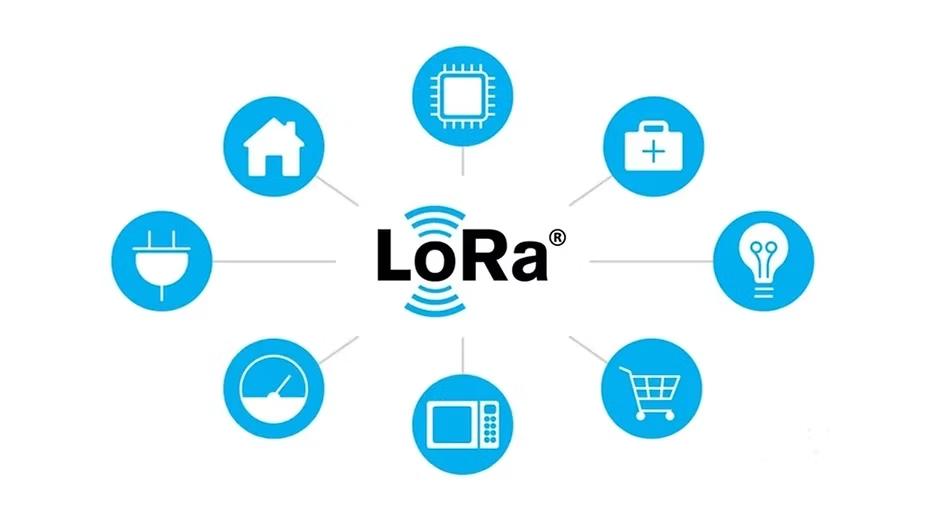
Exploring the Versatility of LoRa: Applications and Benefits
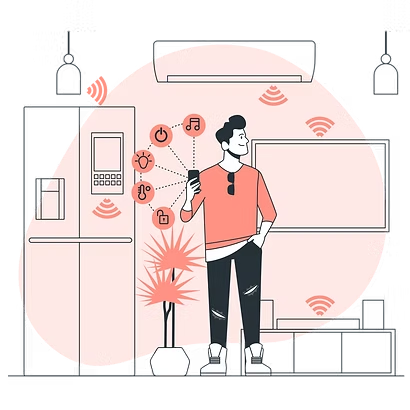
Introduction In today’s connected world, where the Internet of Things (IoT) is transforming industries and daily lives, there’s a growing need for efficient and reliable communication technologies. One such technology that has gained significant traction is LoRa (Long Range). In this blog, we will delve into the vast range of applications and benefits offered by LoRa, as highlighted by Semtech, a leading provider of LoRa technology. I. What is LoRa? LoRa is a low-power, wide-area networking (LPWAN) protocol designed for long-range communication. It enables secure and bi-directional communication between IoT devices and gateways over long distances while consuming minimal power. LoRa operates in unlicensed frequency bands, providing the flexibility needed for widespread deployment. II. Smart Homes LoRa technology has the potential to revolutionize the way home operate, making them smarter and more efficient. By deploying LoRa-enabled sensors and devices, our homes can manage a multitude of issues, from automating routine tasks and optimizing energy consumption to bolstering security and safety. With the integration of smart devices and systems, homeowners can remotely control lighting, climate, and appliances, all through voice commands or mobile apps. Energy efficiency is optimized by monitoring consumption and adjusting systems based on occupancy patterns. Moreover, smart homes prioritize security with connected cameras, sensors, and smart locks, providing real-time monitoring and alerts. As technology continues to evolve, smart homes will likely become even more sophisticated, further transforming the way we interact with and manage our living spaces. III. Industrial Automation LoRa’s long-range capabilities make it ideal for industrial applications. With LoRa-enabled devices, manufacturers can remotely monitor and control machinery, track inventory and assets, and optimize logistics operations. The low power consumption of LoRa devices ensures extended battery life, reducing maintenance efforts and costs. IV. Agriculture In the agricultural sector, LoRa plays a crucial role in enabling smart farming practices. By integrating LoRa sensors into soil moisture probes, weather stations, and livestock monitoring devices, farmers can collect real-time data on soil conditions, weather patterns, and animal health. This data-driven approach allows for precise irrigation, optimized resource allocation, and early detection of potential issues, leading to increased yields and reduced environmental impact. V. Asset Tracking Tracking assets and ensuring their security is a top priority for various industries, including logistics, transportation, and supply chain management. LoRa offers a cost-effective and reliable solution for asset tracking, enabling real-time location monitoring, geofencing, and anti-theft mechanisms. With LoRa, businesses can streamline operations, reduce losses, and enhance customer satisfaction by providing accurate delivery information. VI. Environmental Monitoring With the growing concern for environmental sustainability, LoRa technology is proving invaluable in monitoring and conserving natural resources. By deploying LoRa-based sensors, organizations can collect data on air quality, water pollution, noise levels, and more. This information empowers policymakers and environmental agencies to make informed decisions and take proactive measures to protect our planet. VII. Benefits of LoRa a) Long Range: LoRa devices can transmit data over several kilometers, even in challenging environments, providing extensive coverage. b) Low Power Consumption: LoRa devices are designed to operate on battery power for extended periods, reducing maintenance requirements. c) Scalability: LoRa networks can support thousands of devices, making it suitable for large-scale deployments. d) Cost-Effective: LoRa’s low-cost infrastructure and devices make it an attractive choice for organizations looking to implement IoT solutions. e) Secure: LoRaWAN, the networking protocol for LoRa, ensures end-to-end encryption and authentication, safeguarding sensitive data. Conclusion As the world becomes increasingly connected, LoRa technology is emerging as a powerful enabler for diverse IoT applications. From smart cities and industrial automation to agriculture and environmental monitoring, the versatility and benefits of LoRa are transforming industries and paving the way for a smarter, more sustainable future. Embracing LoRa technology unlocks new possibilities for organizations seeking to optimize operations, reduce costs, and make data-driven decisions in a rapidly evolving digital landscape.
Apr 23, 2024




.png)


.png)


.png)
.png)
.png)
.png)
.png)
.png)
.png)